
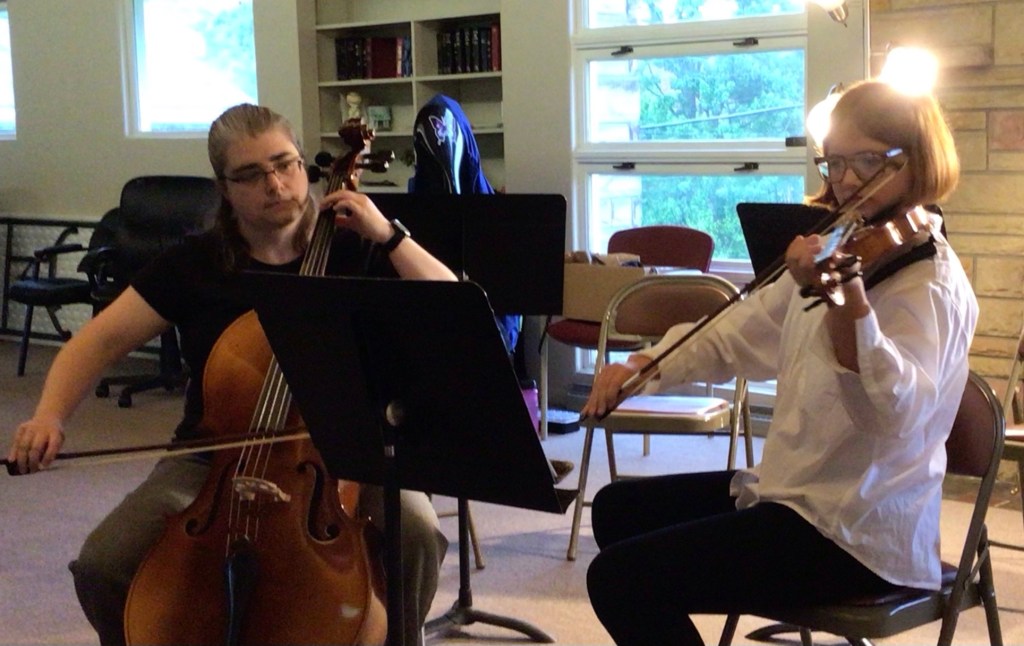


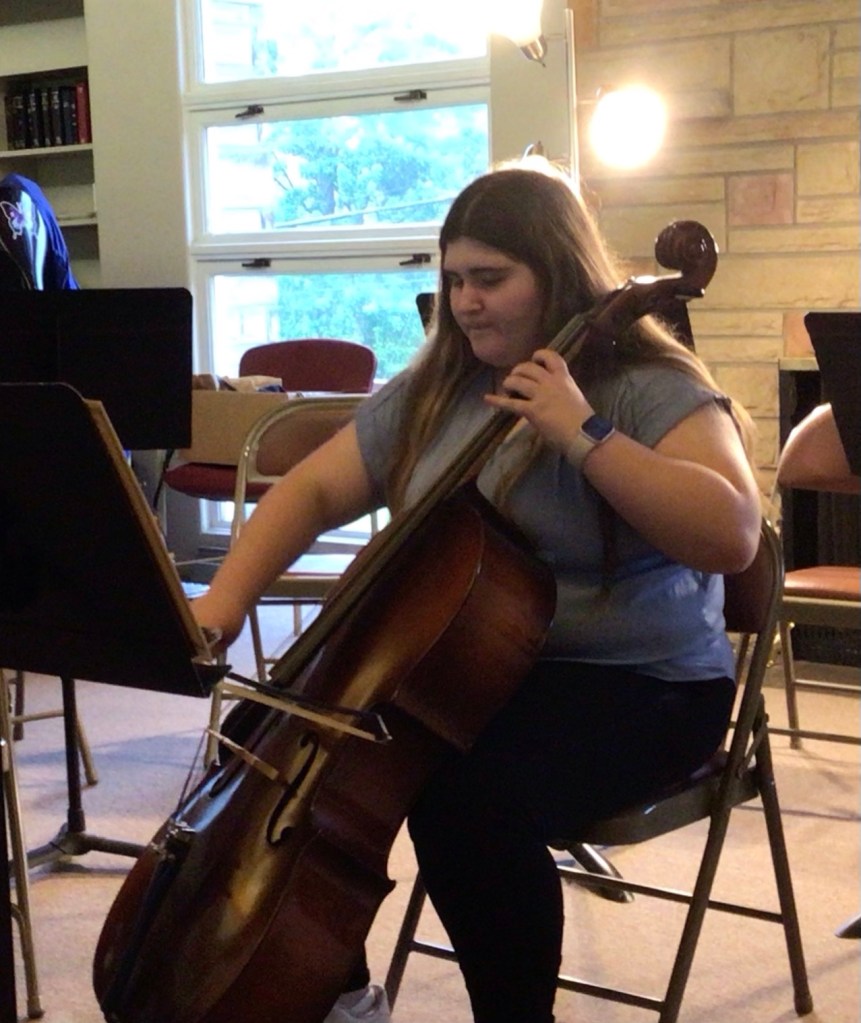

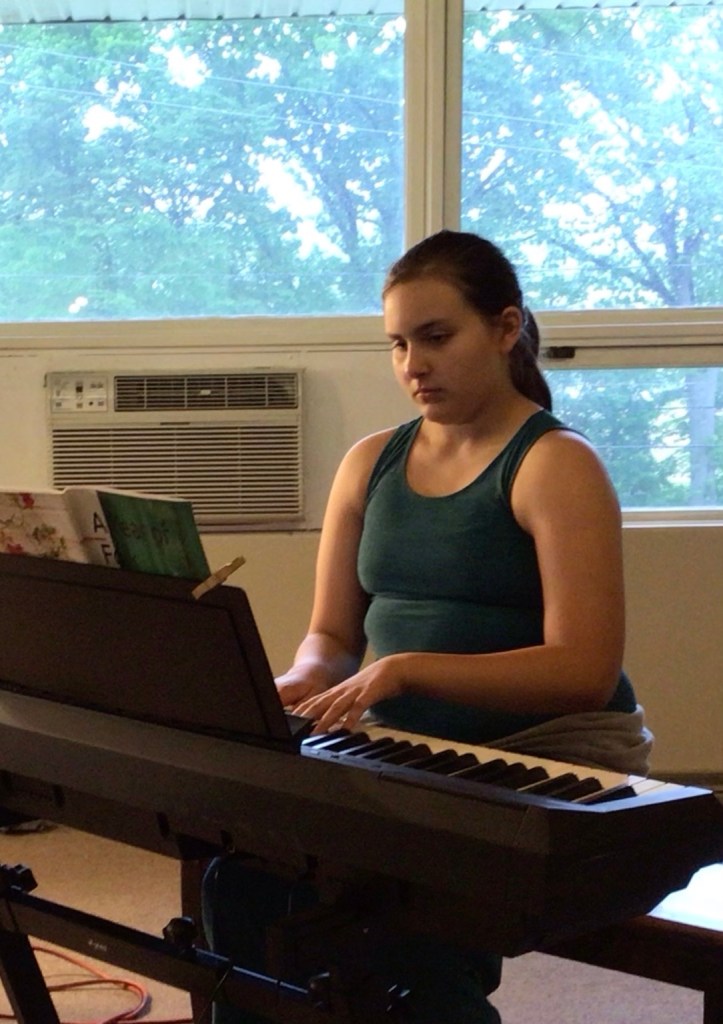


Thank-you Becky for taking the pictures.
Thank-you Becky for taking the pictures.





Amazing Grace for String Quartet opens with viola playing the melody. The cello plays a countermelody, and the violins supply pizzicato texture. The next statement of the theme moves the melody into the treble voices. An elegant string quartet arrangement for weddings, church and recital performances. Listen to it here.
The sheet music is available at Sheet Music Plus or Sheet Music Direct.
Cockles and Mussels is now available as a digital download on Sheet Music Direct and Sheet Music Plus.
Included in A Year of Folk Tunes for Piano, the digital download solo version has D Major warm-ups to facilitate learning the piece. The first verse can be played with no hands together notes and could stand alone as a solo. The second verse requires hands together and a change of position in the left hand.
Learn to play videos for the first verse of Cockles and Mussels are also available on YouTube.
The April canons for string ensemble are in A Major and F Sharp Minor. Most of the rounds have one part doubled so they would be playable with only two parts. In score form, each tune also has an optional piano part for extra rehearsal options. The rounds provided supplemental material for the students working through A Year of Folk Tunes. Any student who needs more practice with three sharps will find them valuable.
A Riddle has the violin and viola parts doubled. Watch out for the G Sharp on the G String.
The Blacksmith is a rhythmic puzzle with staccato and legato playing. The viola and violin are doubled in this round.
In the Hoppy Day the melody is across three strings. The cello and viola double in this round until near the end.
Tale of the Lost Rabbit is the F Sharp Minor round. It is in 3/4 time with the viola and cello parts doubling.
The sheet music is available as a digital download.
A Riddle
The Blacksmith
Hoppy Day
Tale of the Lost Rabbit
Listen to the rounds here.
A Riddle
The Blacksmith
Hoppy Day
Tale of the Lost Rabbit
Thank you Sophie for playing the violin in the videos.
Current round count: 16
If you’d like to title a round, information is available here.
Sweet Betsy from Pike is the G Major tune in A Year of Folk Tunes for Piano. It is now available as a digital download. In addition to the piano solo, four warm-ups in the key of G are included to make it easier to learn. The first verse can be played with no hands together notes and could stand alone as a solo. The second verse requires hands together and an extension of the thumb for B.
Get the sheet music here. Play along with the video. Soon you will be ready to perform Sweet Betsy from Pike.

The March canons for string ensemble are in D Major and B Minor. Most of the rounds have one part doubled so they would be playable with only two parts. In score form, each tune also has an optional piano part for extra rehearsal options. The rounds provided supplemental material for the students working through A Year of Folk Tunes.
In March Hare eighth note slur four patterns in the key of D are the order of the day. The hare is hopping and skittering here and there.
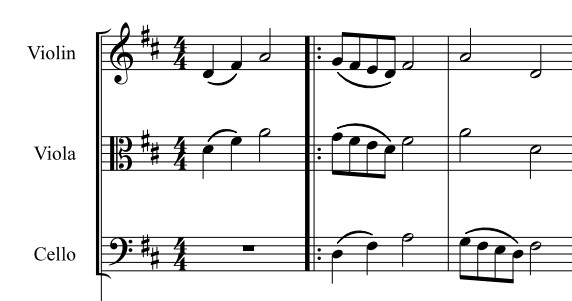
Lady Luck uses only notes of the D Major arpeggio. The viola and cello parts incorporate shifting in order to include a high F Sharp. The violins were surprised by the A on the G string. A great piece for working on intonation across the fingerboard. This is a three-part round with no parts being doubled.
Garden Path is in 3/4 time. The opening statement is followed with phrases which begin with quarter rests. It is a great way to practice melodic and accompaniment playing in the same piece.

The fourth round is in B Minor. Cloudy Day with Wind is in 12/8 time. Playing the B to C sharp on the G string in tune is critical for this canon.
The sheet music for all four rounds is now available.
Listen to the canons here.
Current canon count: 12
An elegant new duet arrangement of Amazing Grace is now available. It is suitable for church or recital performance. The cello and the piano both have melodic sections. The cello part requires some shifting but doesn’t go higher than fourth position. The sheet music is available as a digital download. If you would like to hear it, listen to the video on YouTube.

The next four canons for string ensemble are in G Major. All of the rounds have one part doubled so they would be playable with only two parts. In score form, each tune also has an optional piano part for extra rehearsal options.
Go Bananas! is working the eighth, quarter, eighth syncopated pattern. It can be helpful to chant the rhythm as a teaching hook. “Bananas, bananas, Go (shh) Bananas!”

In Apple Pie the two eighth note, quarter note pattern is the hero of the day. Speak “Apple pie, apple pie” to get the hang of it.
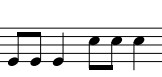
Watermelon Wizard is the next tune in the collection. For this one, the violin and cello parts are doubled leaving the violists to shine as an independent part. The spellbinding rhythmic chant is, ” Watermelon Wizard, Watermelon Wizard, watermelon, watermelon, Watermelon Wizard!”

The fourth round is an entire Fruit Salad. I used “cherries, apples, cherries, grapes and watermelon, pears, pears, watermelon, peaches, cherries, apples, bananas,” but feel free to substitute fruits of your choice.

The sheet music for all four rounds is now available.
Listen to the canons here:
Thanks, Sophie for helping to make the Fruit Salad recording!
Canon status update: 8 new pieces this year. If you have forgotten, it started with
March of the Elephant, Cat’s Meow, Elf’s Dance and Penguin Party
Congratulations! First, Second and Third Place in each category.
Piano A
Kaylynn 252
Sebastian 127
Logan 66
Ignatios 66
Piano B
Grace 267
Charley 212
Karsen 204
Piano C
Philomena 288
Megan 237
Reagan 217
Piano D
Gabriel 366
Joe 310
Margie 222
Piano E
Kate 455
Rori 312
Mia 298
Piano F
Bingan 1,972
Andrew 700
Jacob 652
Strings A
Bingan 486
Amy 433
Kate 158
Strings B
Grace 531
Molly 326
Isla 247
Strings C
Alex 469
Bella 324
Katrina 169
Adult
Lorinda 1,535
Jacob 530
Carla 426

12/8/12 and 12/21/12


 Miriam Troxler